Key Takeaways
- Fight club Phuket is best understood as the island’s whole combat-sports scene, not a single venue. It spans training gyms, fitness camps, and the stadiums that host live fights.
- The training side centres on Soi Ta-iad in Chalong, a roughly 1.5-kilometre road home to more than ten Muay Thai, MMA, and fitness gyms.
- Drop-in training runs from around 300 to 600 THB a session, while live fight nights at the stadiums cost between 1,500 and 2,500 THB.
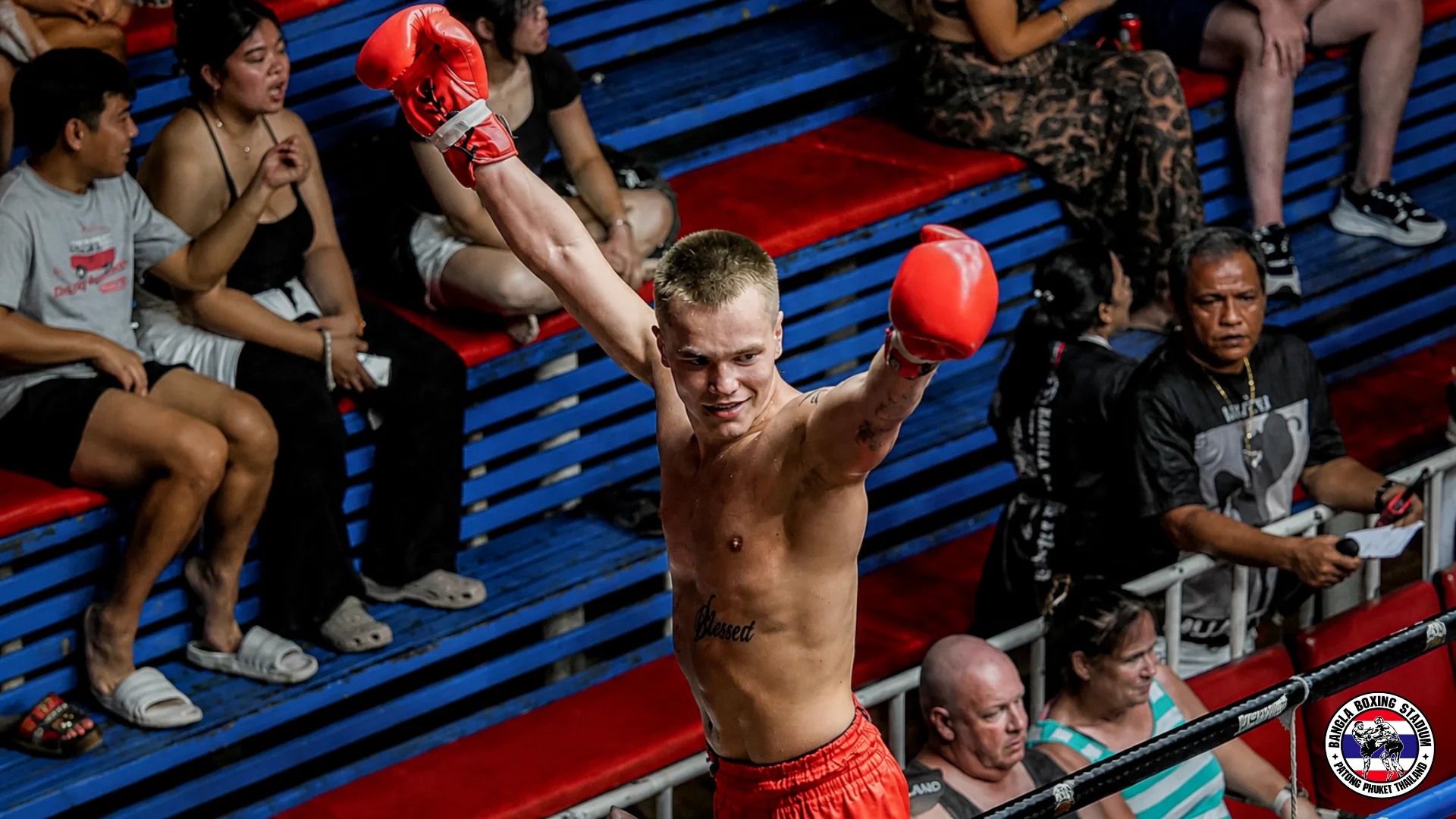
- To watch professional Muay Thai in the heart of Patong, Bangla Boxing Stadium runs fight nights every night of the week.
When people search for a “fight club” in Phuket, they are usually after one of two things: a place to train in combat sports, or a place to watch live fights. The island delivers both. Phuket has grown into one of Southeast Asia’s busiest hubs for Muay Thai and mixed martial arts, drawing beginners, fitness travellers, and professional fighters to the same few square kilometres.
This fight club Phuket guide walks you through what the scene actually looks like, where the gyms are, what training involves, and where to go when you would rather watch the action than step into it yourself.
Table of Contents
- Key Takeaways
- What Fight Club Phuket Really Means
- Where to Train Muay Thai in Phuket: Soi Ta-iad
- What Muay Thai Training in Phuket Costs
- From Training to Watching: Phuket Fight Nights
- Bangla Boxing Stadium: Where to Watch in Patong
- What to Expect at a Phuket Fight Night
- FAQ
- Conclusion
What Fight Club Phuket Really Means

The phrase describes a community rather than a single address. On any given day you will find tourists taking their first Muay Thai class, amateur fighters sharpening their clinch work, and professionals preparing for stadium bouts, often in the same gym. The atmosphere is open and welcoming rather than secretive or underground.
Most gyms teach a mix of disciplines: traditional Muay Thai, mixed martial arts (MMA), Brazilian Jiu-Jitsu (BJJ), and Western boxing, alongside strength and conditioning classes. You can train as lightly or as seriously as you like, with no prior experience required at the beginner level.
Where to Train Muay Thai in Phuket: Soi Ta-iad
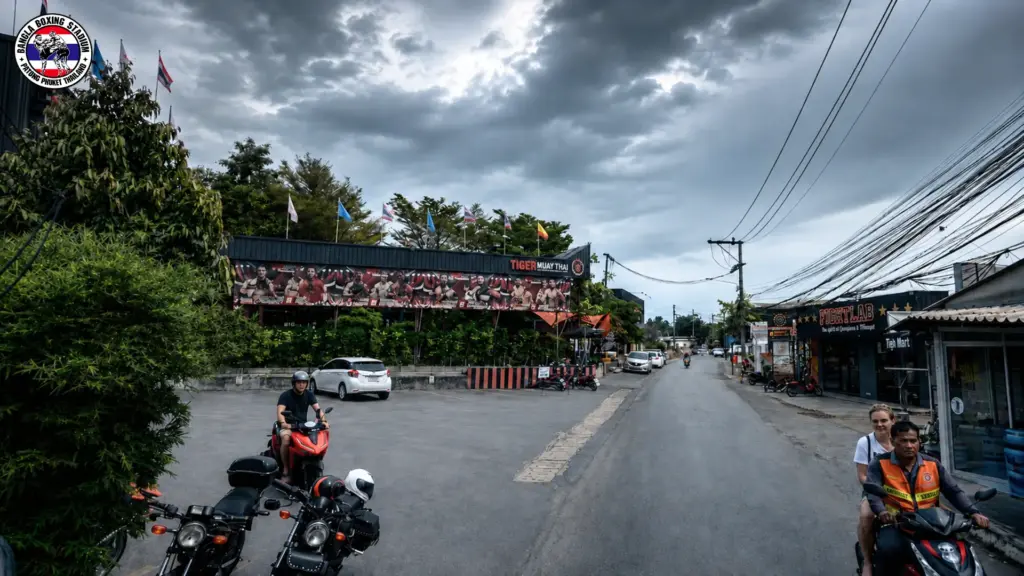
The centre of gravity for training is Soi Ta-iad in the Chalong area, a road of roughly 1.5 kilometres that locals call “Fitness Street.” It packs in more than ten combat-sports and fitness gyms, along with health-focused cafes catering to athletes on strict diets.
Two of the best-known names on the street are Tiger Muay Thai, a large camp running more than 150 classes a week across over twenty class types, and Dragon Muay Thai, a smaller family-run gym known for close, technical instruction. Beyond Soi Ta-iad, camps such as Bangtao Muay Thai & MMA in Cherngtalay and Sinbi Muay Thai in Rawai round out the island’s main training options. Our guide to Muay Thai in Phuket compares these camps by skill level and location.
What Muay Thai Training in Phuket Costs
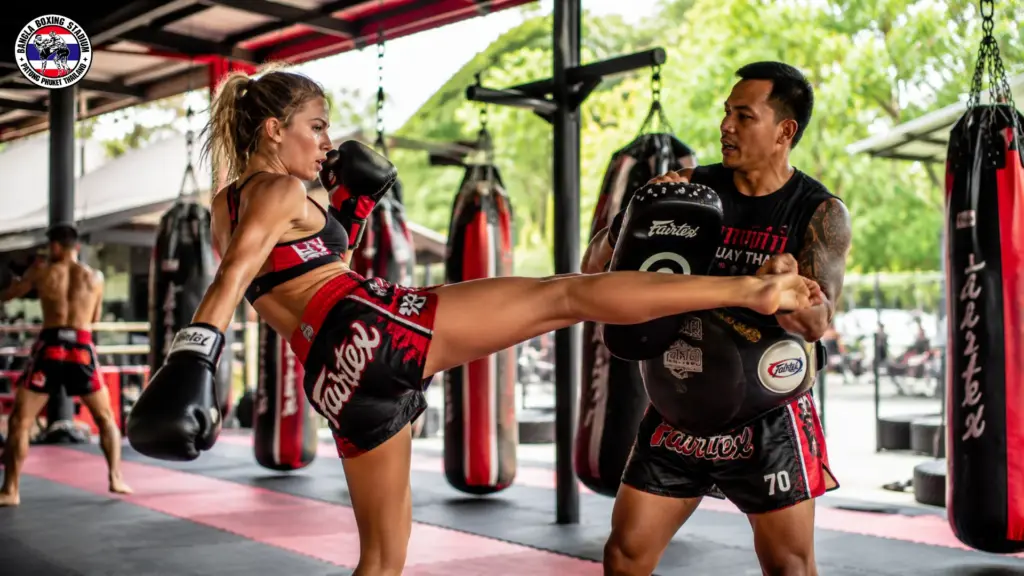
Training is flexible. You can pay per session or commit to weekly and monthly packages:
- Single session: around 300 to 600 THB
- Weekly packages: roughly 2,500 to 4,500 THB
- Monthly packages: roughly 6,000 to 15,000 THB
- Private one-on-one sessions: around 800 to 1,500 THB per hour
Most camps run two sessions a day, typically in the morning and late afternoon to avoid the midday heat. A standard class mixes technical drilling, bag work, pad rounds, and clinching. Beginners are taught the fundamentals first, including stance, footwork, and basic strikes, before any sparring.
Because the climate is hot and humid, give yourself a few days to acclimatise, drink far more water than usual, and bring or buy your own hand wraps and mouthguard for hygiene. Our Phuket Muay Thai training guide covers monthly package prices and the DTV route for longer stays.
From Training to Watching: Phuket Fight Nights
The fight club Phuket scene is not only about training, since plenty of visitors come to train and then stay to watch. Phuket’s stadiums host professional Muay Thai several nights a week, and a live card is the best way to see the techniques you practise in class performed at full speed. Our guide to Phuket Muay Thai fights covers what a full card looks like from first bell to main event.
The island’s main venues are:
- Bangla Boxing Stadium in central Patong, with fight nights every night of the week
- Patong Boxing Stadium on Sainamyen Road, six nights a week (every night except Sunday)
- Sinbi Boxing Stadium in Rawai, on Wednesday and Saturday
- Rawai Boxing Stadium in Rawai, on Tuesday and Friday
Bangla Boxing Stadium: Where to Watch in Patong

If you are staying near the nightlife of Patong, Bangla Boxing Stadium is the most convenient place to catch a fight. It sits directly behind Jungceylon Shopping Center, opposite Banzaan Fresh Market, and runs professional Muay Thai every night, with MMA bouts added on Wednesdays and Saturdays. Our Bangla Stadium Patong guide covers the venue layout and seating tiers in detail.
A typical card features eight bouts, sometimes nine, starting at 9:00 PM after doors open at 8:00 PM and finishing around midnight. Each evening opens with the Wai Kru Ram Muay, the traditional pre-fight ritual, performed to live Sarama music.
Seating is split into two tiers: Stadium at 1,600 THB and Ringside at 2,000 THB on the door, or from 1,500 THB when you book Muay Thai tickets online. Every ticket includes a free T-shirt, and families are welcome with free seating for children on request. The venue is open-air with fans rather than air-conditioning, so dress for the heat.
What to Expect at a Phuket Fight Night
Whether your fight club Phuket trip is about training or watching, a few practical tips help:
- Getting there: a tuk-tuk from central Patong to Bangla Boxing Stadium runs about 100 to 200 THB, and ride-hailing apps like Grab give you fixed pricing.
- Timing: arrive around 8:30 PM for a fight night to catch the first Wai Kru ceremony.
- What to bring: light, breathable clothing and small cash for drinks and snacks. The live music and crowd get loud.
- Etiquette: the Wai Kru is a respectful ritual, so watch quietly before the energy picks up in the later rounds.
FAQ
Do I need experience to train at a Phuket gym?
No. Almost every camp runs beginner classes that start with the basics, and trainers are used to teaching first-timers. You can book a single session to try it before committing to a package.
Can I just watch instead of training?
Yes. The stadiums are open to spectators, with no connection to a gym required. Buying a ticket to a fight night at Bangla or Patong is the simplest way to experience the sport. Our guide on where to watch Muay Thai in Phuket covers seating, timing, and what happens between bouts.
What is the difference between Muay Thai and MMA here?
Muay Thai is striking only, using fists, elbows, knees, and shins, and it is the focus of the stadium fight nights. MMA adds grappling and ground fighting, and is mainly trained at the larger camps, with occasional MMA bouts on Bangla’s Wednesday and Saturday cards.
Conclusion
“Fight club Phuket” is really shorthand for a whole ecosystem: the training gyms of Soi Ta-iad on one side, and the stadium fight nights on the other. Whether you want to throw your first kick or simply watch professionals trade them, the island makes both easy. For a live night out in the heart of Patong, Bangla Boxing Stadium is the most central place to start.
Recommended reading: Muay Thai Patong guide to gyms and fight nights