Key Takeaways
- Muay Thai rules reward clean strike impact, fighter balance, and ring control rather than raw punch volume.
- Scoring follows the ten-point must system where a panel of judges, usually three, scores each round to determine the winner.
- Legal techniques allow punches, kicks, knees, elbows, and upper-body clinching, while hip throws, headbutts, and groin strikes are strictly prohibited.
- A fight can end at any moment through a knockout, technical knockout, referee stoppage, or a points decision after the final bell.
- First-time visitors can track real-time dominance by watching which fighter maintains solid posture and forces their opponent off balance.
Attending a live fight night in Thailand is one of the most thrilling cultural experiences you can enjoy on your travels. The roar of the crowd, the pulse of traditional ringside music, and the raw power of elite combat athletes create an electric stadium atmosphere.
If you are stepping into a stadium for the first time, learning the basic Muay Thai rules ensures you catch every dramatic shift in the ring. Understanding how strikes score and why the referee steps in helps you follow every round with confidence.
Table of Contents
- Key Takeaways
- Muay Thai Rules in Brief
- What Fighters Can and Cannot Do
- How Judges Score a Muay Thai Fight
- How a Fight Can End Through KO, TKO, and Decision
- What to Watch for From Your Seat
- See the Rules in Action at Bangla Boxing Stadium
- Frequently Asked Questions About Muay Thai Rules and Scoring
- Conclusion
Muay Thai Rules in Brief
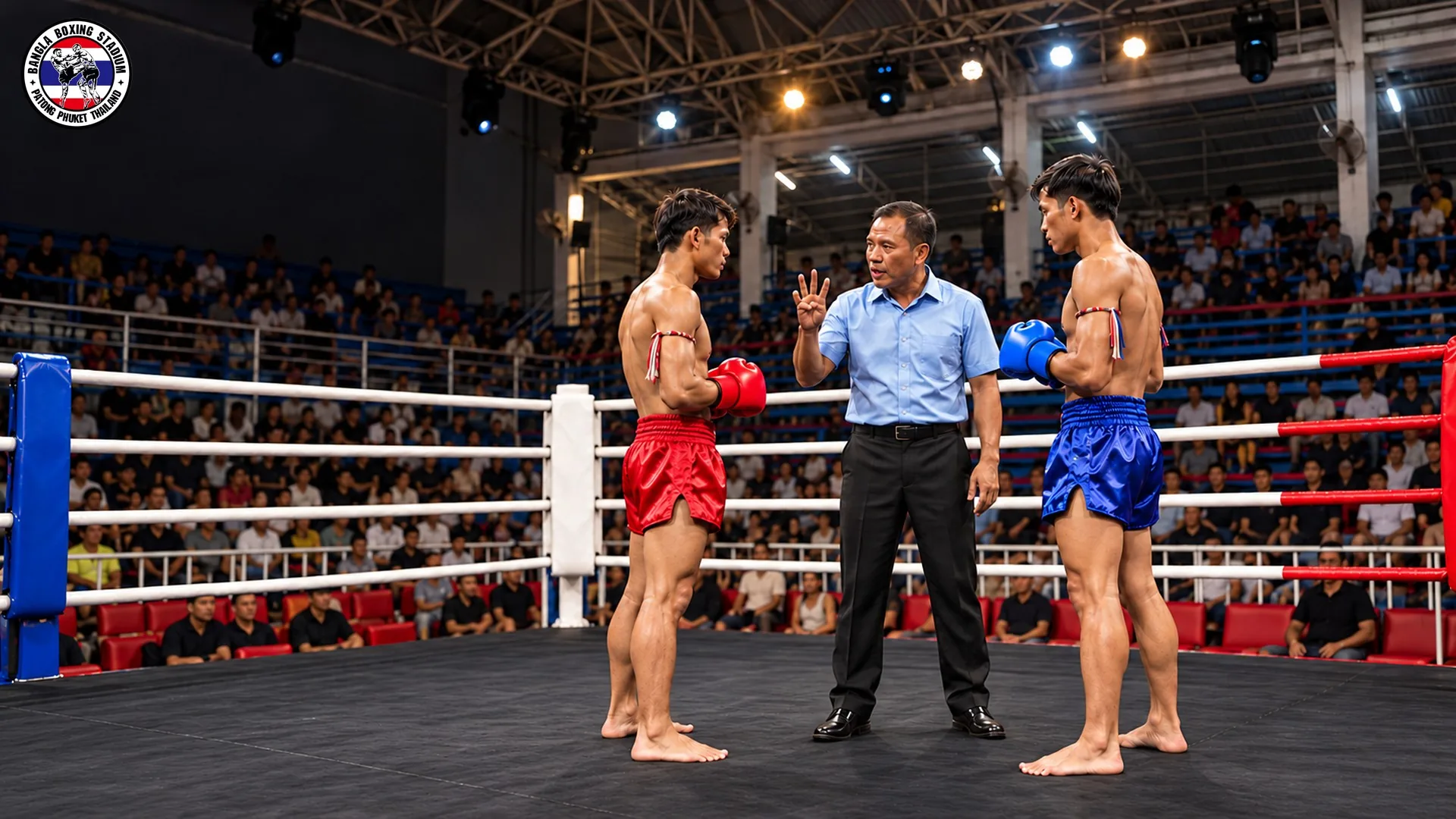
Professional Muay Thai rules govern stand-up combat where two fighters compete over timed rounds scored by ringside judges using punches, kicks, knees, elbows, and clinching. The referee oversees the action inside the ropes, enforcing safety regulations and stopping illegal fouls. If you are new to the sport, start with what Muay Thai is before reading how it is judged.
Unlike combat sports that restrict clinching or kicking, such as boxing and kickboxing, Muay Thai encourages fighters to engage in close-quarter neck wrestling and standing sweeps. Action continues uninterrupted until a fighter touches the canvas, the round bell rings, or the referee calls a break.
Traditional championship bouts are scheduled for five rounds of three minutes each with two-minute rest breaks, though modern stadium promotions frequently tailor round counts and rest periods to suit their fight cards. A bout concludes when time expires and judges tally scorecards, or when one fighter can no longer defend themselves safely.
What Fighters Can and Cannot Do
Muay Thai is widely respected for its open striking rules, but the sport maintains strict boundaries to guarantee athlete safety and fair competition. Knowing which weapons are legal and which maneuvers trigger penalties helps you understand referee warnings during heated exchanges.
Permitted Striking and Clinch Techniques
Fighters can strike any legal target area including the head, torso, ribs, and legs with designated weapons. Punches, roundhouse kicks, direct push kicks, downward elbow strikes, and driving knees are completely legal throughout the contest.
Upper-body clinching is a signature element of the sport. Combatants can wrap their arms around an opponent’s neck, shoulders, and waist to deliver close-range knee strikes or seek positional control. Sweeping an opponent off their feet is permitted when executed through rotational momentum, off-balancing pivots, or catching a kick and kicking out the supporting leg.
Prohibited Fouls and Illegal Grabs in the Ring
Referees strictly penalize unsportsmanlike behavior and dangerous maneuvers that violate safety protocols. If a fighter commits a foul, the referee issues a verbal caution, deducts points, or disqualifies the offender for flagrant misconduct.
- Groin Strikes Kicking, kneeing, or punching the groin is an immediate foul that grants the injured fighter recovery time.
- Wrestling Throws and Slams Judo-style hip tosses, suplexes, and slamming an opponent onto the canvas with body weight are illegal.
- Illegal Tripping Hooking the back of an opponent’s heel or calf with the leg to trip them over is strictly banned.
- Fouls to the Head and Spine Headbutts, biting, eye gouging, and direct strikes to the back of the neck or spine are forbidden.
- Attacking a Grounded Fighter Striking an opponent while they are down on the canvas or rising from a knockdown is a serious foul that can cost points or lead to disqualification.
How Judges Score a Muay Thai Fight
Muay Thai judges look for clean power, technical execution, balance, and dominance across every range, from kicks at distance to knees in the clinch. Understanding Muay Thai rules and scoring explains why a fighter who lands less often can still win the round.
How Does the Ten-Point Must Scoring System Work?
Muay Thai uses the ten-point must system, where the winner of each completed round receives ten points while the opponent receives nine points or fewer. When two fighters battle through a close round with equal damage and exchanges, judges may score the round an even ten-ten draw.
Official scorecards reflect round dominance clearly. Under common rule sets, a round with an overwhelming advantage, or a round won with a knockdown, is usually scored 10-8, and a round won with two knockdowns is usually scored 10-7. At the final bell, all round scores are summed across the bout to determine the winner.
Why Clean Strike Impact Outscores Pure Volume
First-time spectators are often surprised when a fighter throwing dozens of rapid punches loses the round to an opponent landing fewer, heavier strikes. In professional muay thai scoring, superficial contact that hits a defensive block earns no points.
- Visible Physical Effect Strikes that snap the head back, force a fighter to stumble, or visibly bruise the body carry the highest score.
- Clean Execution Kicks and knees that land directly flush against the body or ribs without being deflected score heavily.
- Effective Aggression Marching forward only earns points when accompanied by accurate, damaging strikes rather than missed swings.
- Damage over Speed Heavy, committed strikes usually outscore light combinations that produce no physical reaction.
Evaluating Fighter Balance and Defensive Composure
Balance is a core tenet of Muay Thai judging. Thai stadium judges evaluate how fighters receive incoming attacks just as carefully as they assess the strikes themselves.
A fighter who absorbs a kick without blinking, remains upright, and immediately fires back with a counter-attack displays ring composure. Conversely, if a combatant loses their footing, turns their back, or stumbles across the ring after a collision, judges count that loss of balance against them. Maintaining poise under heavy fire proves dominance to the judges at ringside.
How a Fight Can End Through KO, TKO, and Decision
Every bout builds toward a conclusive outcome, whether decided by a single devastating strike or through points accumulated over the entire distance. Understanding how the referee and ringside officials determine the final result keeps you fully engaged until the official announcement in the ring.
Knockouts and Referee Stoppages
A Knockout occurs when a fighter is floored by a legal strike and fails to rise to their feet before the referee reaches the count of ten. If the fighter is unresponsive or clearly disoriented, the referee waives off the count immediately to protect their well-being.
A Technical Knockout occurs when the referee steps between the fighters to stop the contest because one competitor is no longer defending themselves intelligently. A bout can also end by technical stoppage if the ringside doctor rules a facial cut too severe to continue safely, or if a corner team tosses in a towel to retire their fighter.
Judges Scorecards and Stadium Decisions
When a contest completes all scheduled rounds without a stoppage, the final outcome rests with the ringside judges. Each judge tallies their independent scorecards and submits them to the ring announcer.
- Unanimous Decision All three judges agree on the same winner based on total round points.
- Majority Decision Two judges score the fight for one competitor while the third judge rules the contest a draw.
- Split Decision Two judges score in favor of one competitor, while the third judge awards the bout to the opponent.
- Draw The scorecards result in an equal total, leaving the bout without an individual winner.
What to Watch for From Your Seat
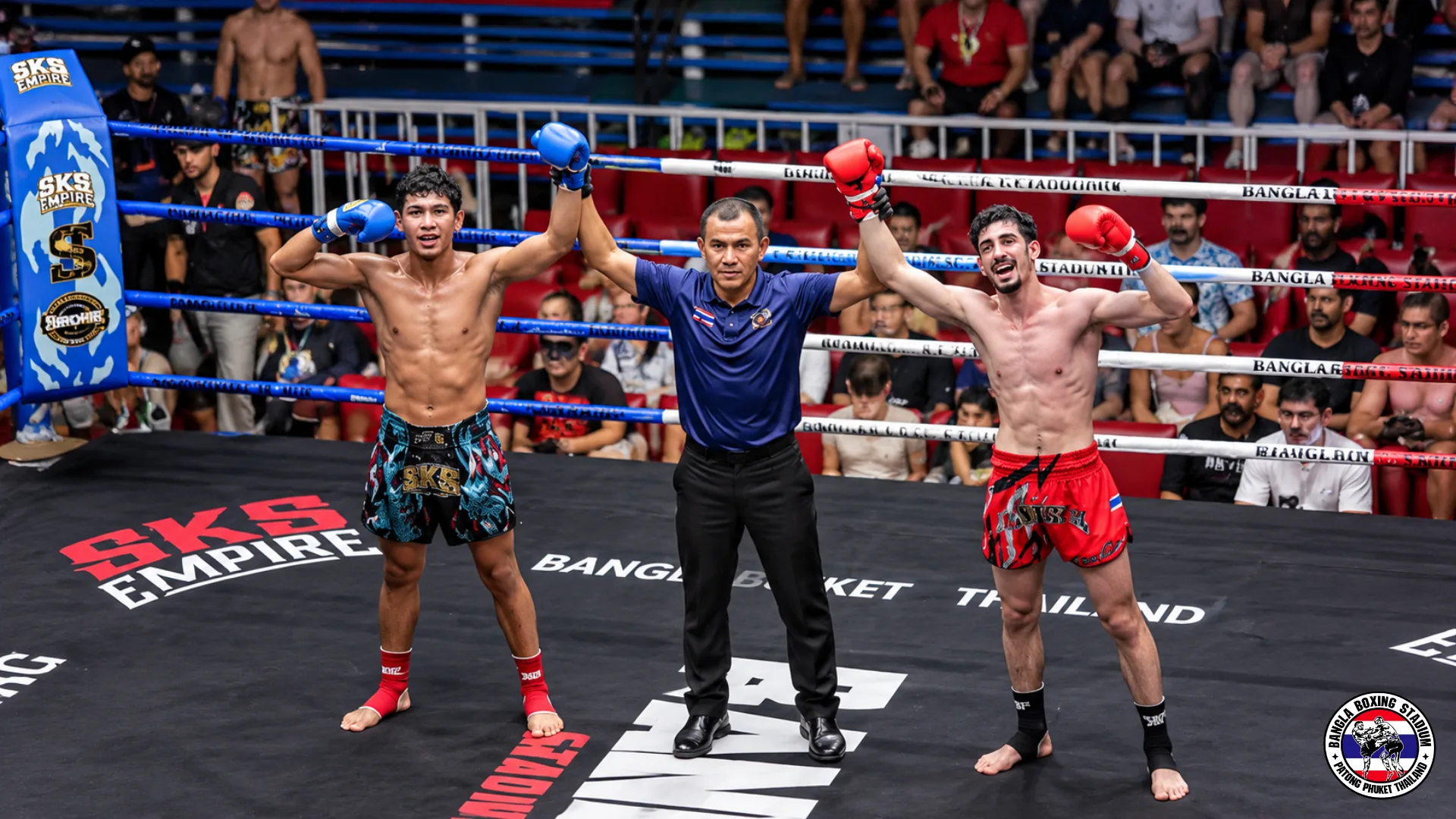
Watching live Muay Thai from the stands is an immersive experience where visual cues, sound, and crowd energy reveal who is truly leading the contest. Paying attention to fighter posture and ring movements allows you to score the action like a veteran fight analyst.
Assessing Fighter Balance and Body Language
Keep your eyes on the fighters’ hips, stance, and facial expressions during heated exchanges. Top-tier fighters maintain an upright, relaxed posture, planting their feet securely before unleashing heavy kicks and returning to a steady guard.
When a fighter begins to tire or take damage, their posture changes noticeably. Look for dropping hands, labored breathing, or legs that wobble slightly when stepping backward. A fighter who smiles, resets their guard smoothly, and holds the center of the ring is usually dictating the pace in the eyes of the judges.
Understanding Clinch Battles and Sweeps
When two combatants lock horns in the center of the ring, they are not resting, but engaging in an intense wrestling match. Watch how fighters fight for inside neck position, using their forearms to lever the opponent’s chin upward and expose the ribs to knees.
Listen for the collective roar of the crowd whenever a fighter executes a clean sweep. Dumping an opponent flat on the canvas while remaining on your feet is one of the most decisive statements a fighter can make. The fighter standing over their grounded rival scores significant points for dominance and ring craft.
Reading Corner Signals and Stadium Momentum
Between rounds, observe the energy inside each corner. Corner teams work rapidly within the short rest break, applying ice, treating swelling, and shouting tactical adjustments to their fighter.
If a corner team looks calm and confident while the opposite side is scrambling to massage tired calves and repair cuts, the fight momentum is tilting. As the bout moves into the final rounds, the fighter who believes they are ahead will often stay disciplined on the outside, daring their opponent to take reckless risks to close the score.
See the Rules in Action at Bangla Boxing Stadium
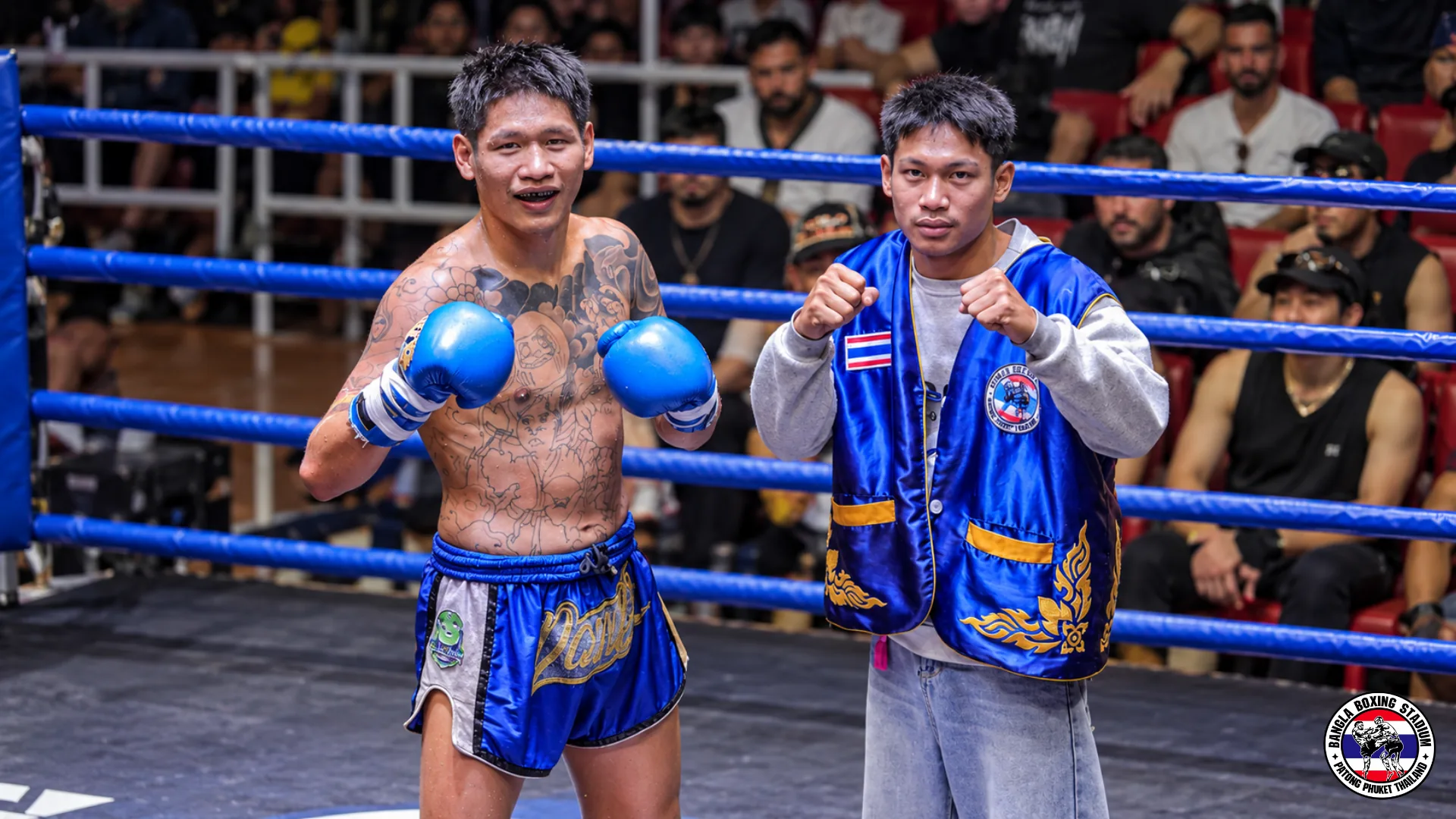
There is no better way to appreciate professional Muay Thai rules than watching the action unfold live from ringside. Bangla Boxing Stadium has brought authentic fight nights to Patong for 22 years since opening its doors on 22 April 2004. Our guide to Bangla Stadium Patong covers the fight schedule and seating in more detail.
Located at 155/16 Phang Muang Sai Kor Road, directly behind Jungceylon Shopping Center and opposite Banzaan Fresh Market, the stadium accommodates 900 spectators in an open-air amphitheater setting with overhead ceiling fans. Live Sarama music played by traditional musicians accompanies the fighters from their opening Wai Kru ritual through every round. English commentary runs through the night, so you can follow each bout and its result.
Choose between raised Stadium seating at 1,600 THB with panoramic views or Ringside seating at 2,000 THB right against the canvas, with a complimentary stadium T-shirt included with every ticket. To experience the heart-pounding intensity of live Muay Thai in the heart of Patong, book your Bangla Boxing Stadium tickets on the official website or visit the stadium box office ahead of fight night.
Frequently Asked Questions About Muay Thai Rules and Scoring
What Strikes Score the Highest Points in Muay Thai?
Clean body kicks, head kicks, and flush knee strikes delivered inside the clinch score the highest points in Muay Thai. Judges reward these strikes because they require immense technical execution and inflict visible structural damage. Punches score too, but judges usually give them less weight unless they clearly hurt the opponent.
Why Do Muay Thai Judges Value Kicks Over Punches?
Judges prioritize kicks over punches because a clean shin strike delivers immense force that directly tests an opponent’s physical endurance and defensive guard. In traditional stadium scoring, absorbing or cleanly blocking heavy kicks requires exceptional skill and conditioning.
- Concussive Impact Roundhouse kicks to the ribs or arms deliver far greater force than standard hand strikes.
- Technical Difficulty Landing high and middle kicks takes balance and timing, and a missed kick leaves the kicker open to a counter.
- Postural Disruption A solid kick visibly pushes an opponent back, directly satisfying the judging criteria for broken balance.
Can Fighters Sweep or Trip Their Opponent Legally?
Fighters can legally sweep an opponent by catching a kick and kicking away the supporting leg, or by twisting an opponent off balance during a clinch exchange. However, fighters cannot hook their heel behind an opponent’s calf, perform judo hip throws, or sweep with the back of the leg.
Do Professional Muay Thai Fights Always Last Five Rounds?
Traditional championship bouts at premier stadiums are scheduled for five rounds of three minutes each, but round structures vary across promotions. Regional stadium cards, tournament formats, and special events frequently host three-round bouts with adapted rest intervals to deliver fast-paced action.
Conclusion
Understanding professional Muay Thai rules completely transforms your fight night experience. Instead of watching a chaotic brawl, you begin to recognize a chess match of speed, heavy impact, defensive balance, and ring control.
Knowing what judges look for allows you to appreciate the skill behind every clinch sweep and thudding body kick. Secure your ringside or stadium seat to see these authentic rules put to the test under the lights. Tickets are available online or at the box office before the evening card begins.