Key Takeaways
- Wai Kru is the traditional opening ritual in Muay Thai that honors teachers, parents, and gym lineage before combat begins.
- The ceremony consists of two parts, combining the devotional salutation of Wai Kru with the graceful boxing dance of Ram Muay.
- Fighters wear blessed Mongkol headbands and Pra Jiad armbands for protection, focus, and confidence.
- Live ringside Sarama music sets a calm tempo for the dance before speeding up for round action.
- Bangla Boxing Stadium in Patong presents this authentic pre-fight tradition before every Muay Thai bout, seven nights a week.
Stepping inside a Thai boxing arena reveals an ancient tradition before any punch or kick lands in the ring. The Wai Kru is the reverent pre-fight ritual that opens every traditional bout, transforming the canvas into a space of heritage and focus.
At Bangla Boxing Stadium, we host authentic fight nights in Patong every evening. Our cards celebrate genuine Thai ring customs, giving travelers a firsthand look at deep cultural ceremonies alongside world class combat.
Table of Contents
- Key Takeaways
- What the Wai Kru Is in Muay Thai
- Wai Kru and Ram Muay, What Each Part Means
- The Mongkol and Pra Jiad Fighters Wear
- The Live Sarama Music Behind the Ritual
- How to Watch the Wai Kru Respectfully as a Spectator
- Seeing the Wai Kru Live in Patong
- Frequently Asked Questions About Wai Kru Muay Thai
- Conclusion
What the Wai Kru Is in Muay Thai
The Wai Kru is a traditional pre fight ritual where Thai boxers pay homage to their teachers, parents, and trainers before combat. The ceremony centers on gratitude for knowledge received, while allowing athletes to calm their minds and focus their energy inside the ring.
Cultural Meaning and Homage to Teachers and Parents
The ritual reflects core Thai cultural values centered on respect and humility toward those who pass down knowledge. In Thai society, the word kru originates from the Sanskrit term guru, which represents a revered guide or teacher. Fighters use this quiet time on the canvas to remember the guidance of their trainers and the support of their families.
This moment in the ring is an expression of personal gratitude toward the people who taught and supported the fighter. It is a gesture of respect that fighters from many countries perform before they compete. Performing these slow movements allows competitors to acknowledge their mentors before entering intense physical combat.
Why Every Fighter Performs the Ceremony Before Combat
Fighters perform the ritual to prepare their minds and bodies for the rigorous physical demands of the upcoming rounds. Stepping into the ring requires complete emotional composure and loose muscles, making this opening routine an essential transition into live combat.
- Centering respiration and releasing pre fight nervous tension under arena lights.
- Warming up major muscle groups by gently stretching hips, legs, and shoulders.
- Testing the ring canvas surface to evaluate foot grip and ring balance.
- Establishing sharp mental focus and discipline before exchanging heavy strikes.
Wai Kru and Ram Muay, What Each Part Means
While many casual spectators treat the opening ceremony as one single continuous performance, the ritual actually divides into two distinct cultural phases. The complete ceremony, known as wai kru ram muay, blends formal static salutations with graceful fluid movement across the canvas to prepare athletes for competition.
Wai Kru as the Salutation of Devotion and Lineage
The initial phase begins as soon as the athlete steps between the ropes and seals the ring boundaries. Fighters often circle the ring while running a glove along the top rope, symbolically securing the space for fair competition.
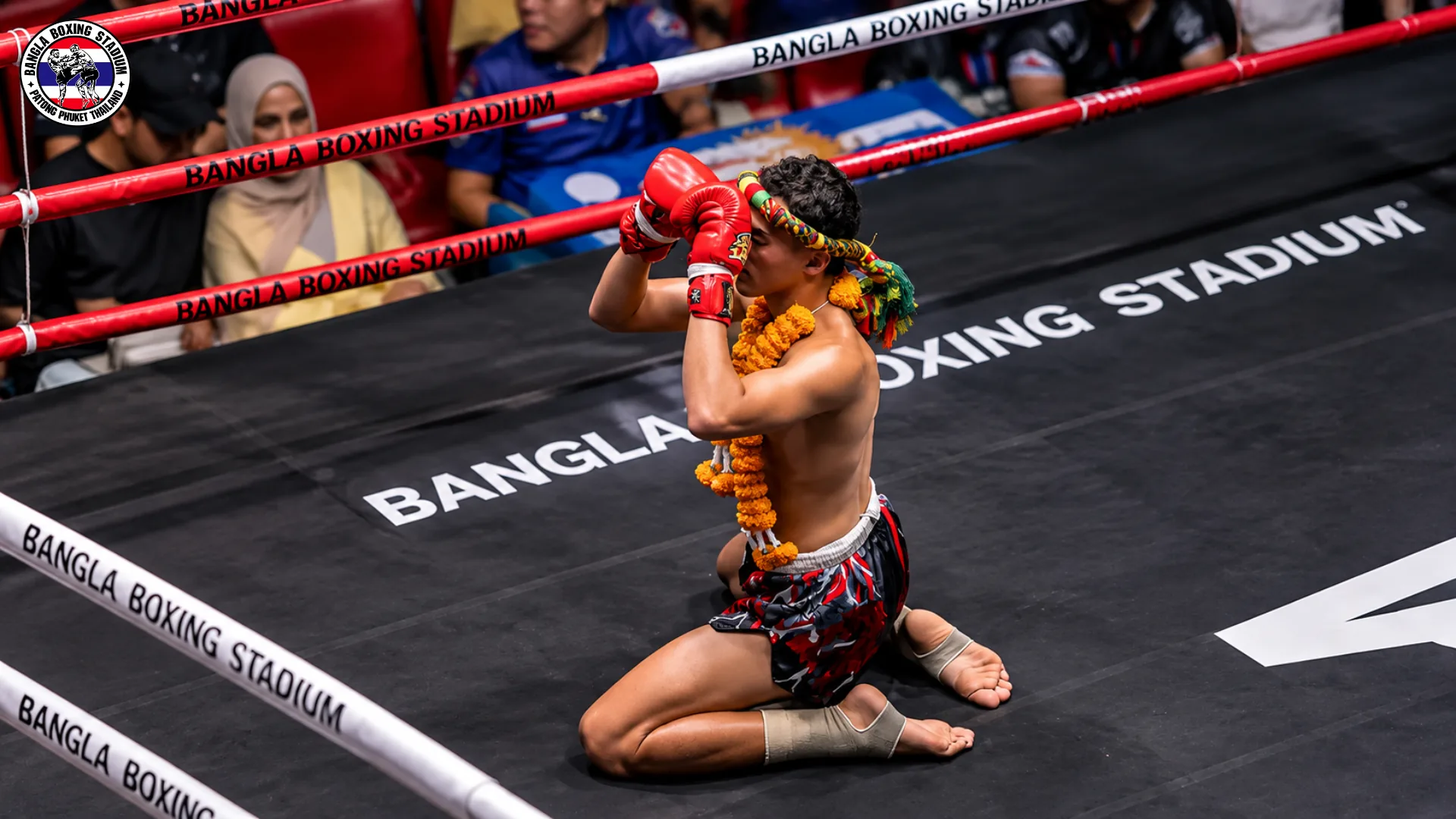
Next, the boxer kneels facing the direction of their gym or home province to perform three bows known as the wai. Each bow honors their teachers, their parents, and their ring ancestors who preserved the art. This stationary tribute shows humility, proving that the fighter enters the ring with respect rather than reckless arrogance.
Ram Muay as the Pre Fight Boxing Dance and Warmup
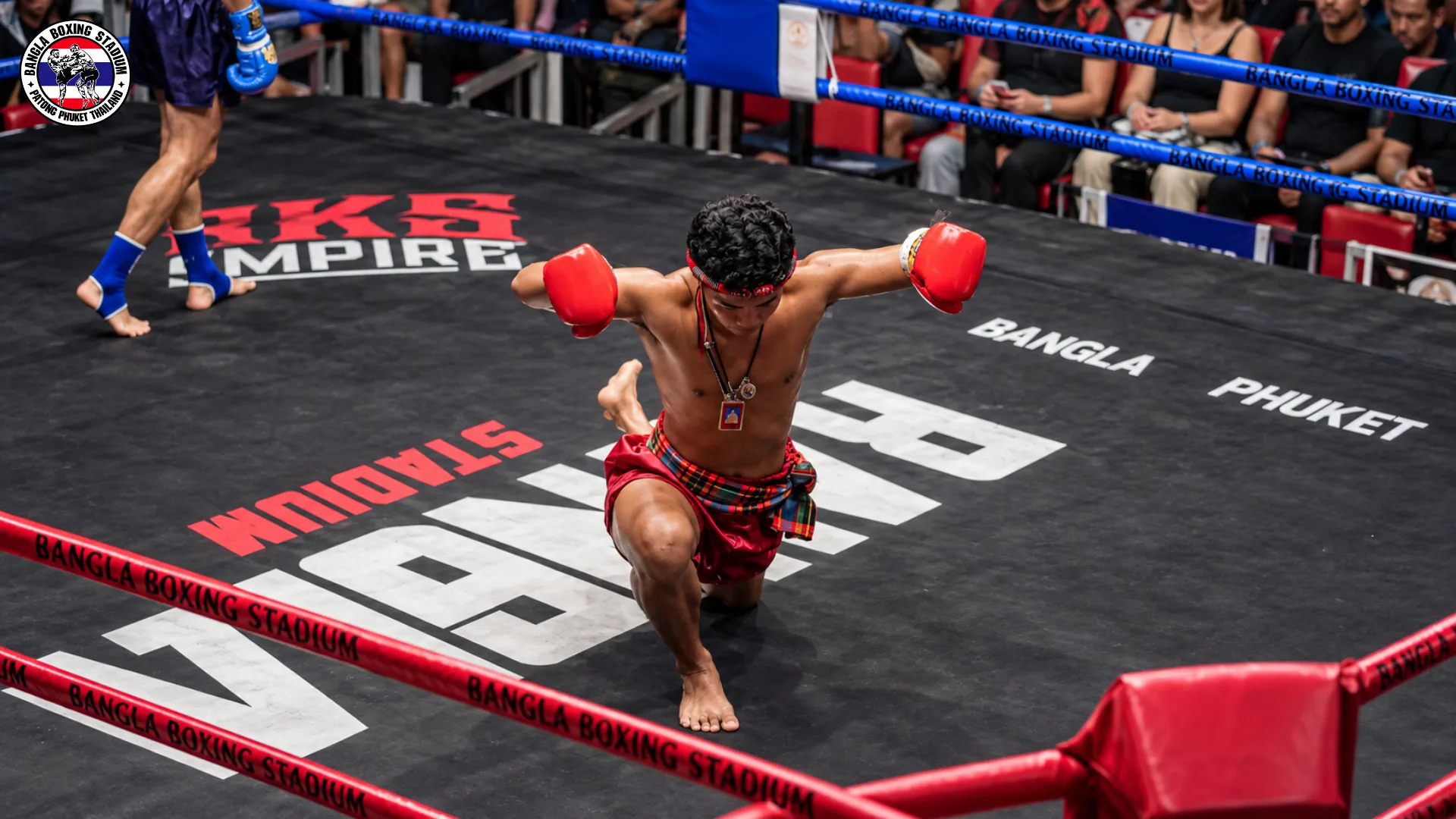
Once the kneeling salutation concludes, the athlete rises to perform the ram muay, which translates directly to boxing dance. This dynamic sequence consists of stylized footwork, gliding arm motions, and slow balance poses that trace back through centuries of regional styles.
Fighters often execute specific movement patterns inspired by traditional folklore, such as the flight of an eagle or the stance of a legendary hunter. Beyond cultural storytelling, these fluid lunges and leg lifts serve practical athletic goals. The movements warm the joints, test canvas grip, and project quiet confidence to the opponent across the ring.
The Mongkol and Pra Jiad Fighters Wear
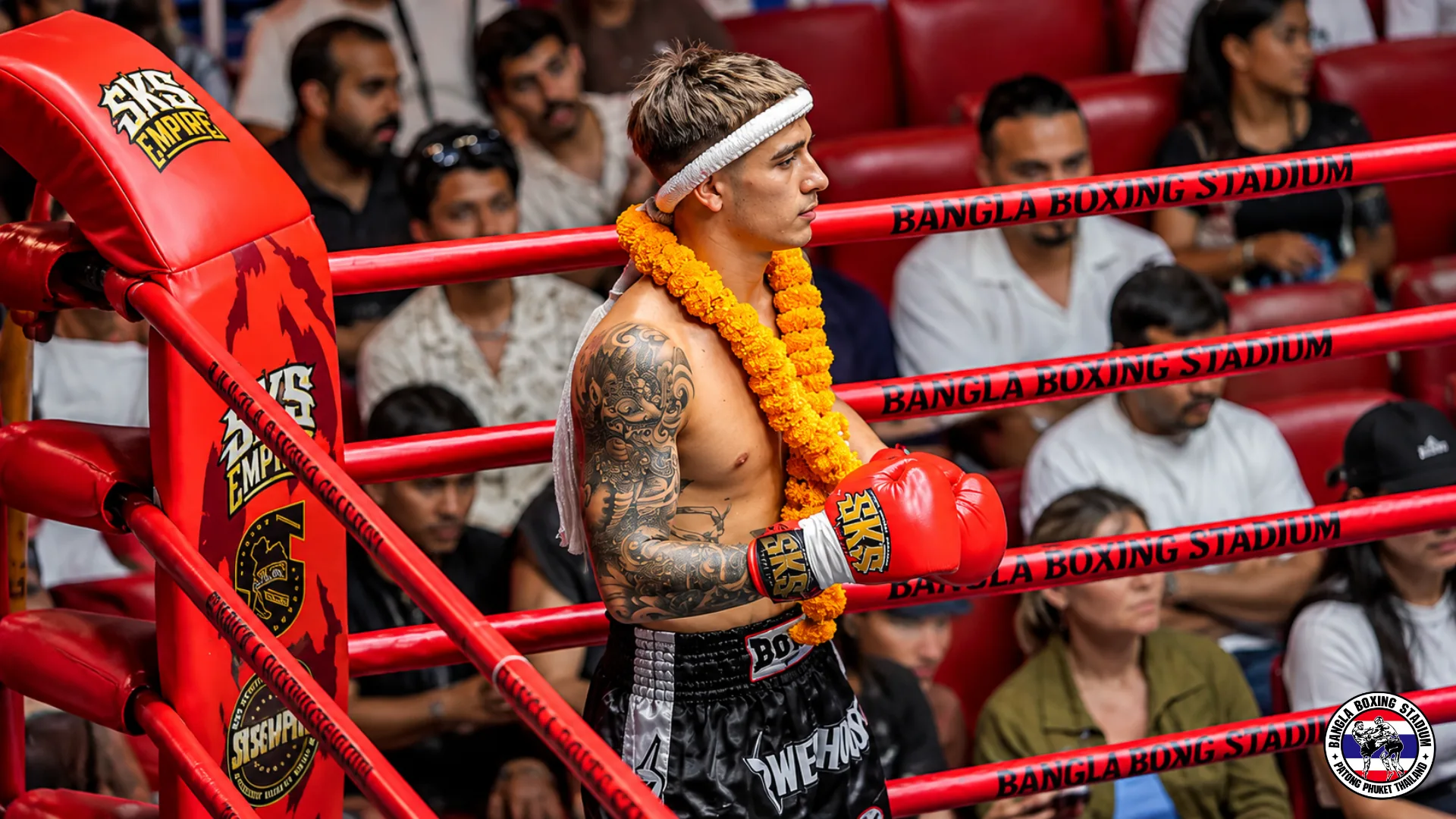
Spectators watching the pre fight ceremony immediately notice the distinctive woven headwear and arm cords worn by both competitors. These sacred traditional accessories hold deep cultural significance in traditional Muay Thai, serving as enduring symbols of guidance, spiritual protection, and personal courage.
Sacred Mongkol Headband and the Corner Removal Custom
The Mongkol is a rigid circular headband with a braided tail that sits atop the fighter’s head during the opening dance. Handcrafted from blessed cords and sanctified fabric, trainers present the headband to students as a mark of readiness for stadium combat.
Fighters never wear the Mongkol during actual combat rounds. After the ram muay ends, the fighter walks to their corner, where the head trainer recites a quiet blessing and lifts the headband off. This intimate corner custom signals that the formal ceremony has ended and full contact fighting is about to begin.
Traditional Pra Jiad Armbands Worn Throughout the Bout
Unlike the headband, the Pra Jiad are woven fabric cords tied snugly around one or both biceps. Historically, Thai warriors tied strips of cloth from family garments around their arms before marching into territorial skirmishes. Today, fighters receive them from trainers to carry good fortune, inner strength, and spiritual confidence.
Fighters continue wearing their Pra Jiad through every round of the fight. The bands remain in place while punches, elbows, and clinch battles unfold. For international visitors, spotting these colorful armbands adds a tangible link to ancient combat heritage.
The Live Sarama Music Behind the Ritual
The unique atmosphere of a traditional Thai boxing stadium relies on the live music playing continuously from ringside. This specialized rhythmic soundtrack, known as Sarama, dictates the tempo of the ceremony and sets the emotional tone for the entire arena crowd.
Four Piece Ringside Band and Traditional Instruments
An authentic stadium band consists of musicians playing four traditional Thai acoustic instruments positioned directly beside the canvas. The lead melody comes from the pi chawa, a double reed wooden pipe with a piercing tone that rises above the crowd noise.
Two double headed drums known as klong khaek provide the foundational pulse with deep syncopated beats. Small brass cymbals called ching keep precise time. Because the music is performed live, the musicians adapt their tempo in real time to match the movements of the fighters.
How the Rhythm Controls the Pre Fight Atmosphere and Bout Pace
During the opening dance, the Sarama band plays a slow, hypnotic melody designed to calm racing pulses and encourage smooth motion. The languid rhythm helps both athletes settle their nerves and focus on their footwork.
Once the referee signals round one, the music shifts immediately into an urgent driving tempo. The drums strike faster during explosive striking exchanges and quicken to a frenzy during close clinch knees. This acoustic interaction between live musicians and fighters creates the unmistakable pulse of authentic Thai boxing. Our guide to the best Muay Thai live show performances in Phuket covers the music and ceremony across a full fight night.
How to Watch the Wai Kru Respectfully as a Spectator
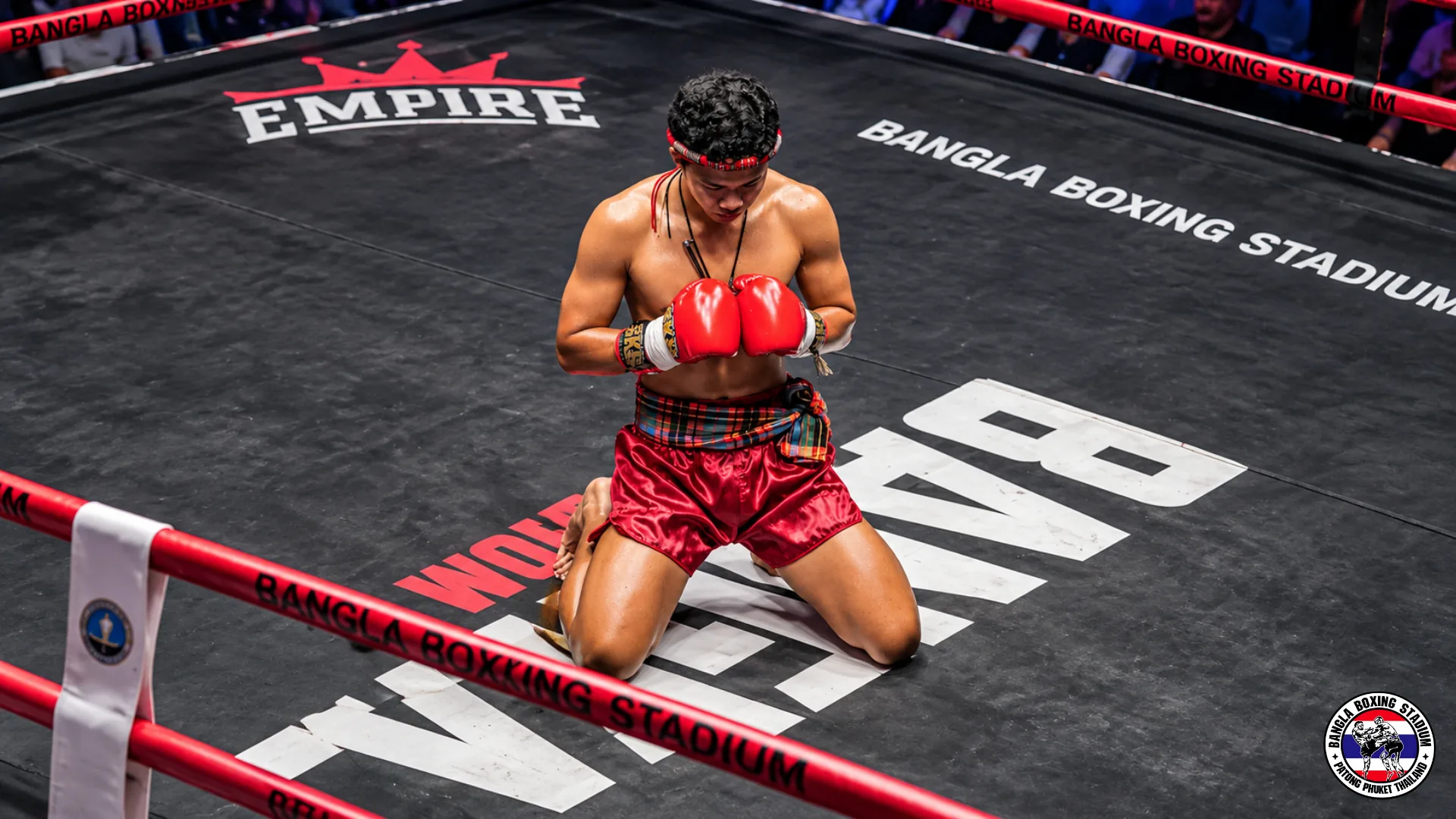
Experiencing the pre fight ceremony ringside is one of the most memorable parts of visiting a live Thai boxing stadium. Knowing basic spectator etiquette ensures that you enjoy the ritual while showing proper appreciation for local cultural customs and fighter focus.
Stadium Etiquette and What to Expect During the Ritual
Spectators should treat the opening dance as a serious display of tradition and mental focus. Keep conversations at a considerate volume and avoid shouting or jeering while athletes kneel in quiet contemplation.
When the fighter finishes their final sequence and bows to each side of the ring, polite applause is completely welcome. Thai crowds warmly applaud the completion of a well executed routine. Recognizing the effort and grace of the athlete shows genuine appreciation for the art.
Photography Guidelines and Ring Boundary Awareness for Visitors
If you would like to take photos or video, ask the stadium staff about the house rules on the night, and film only from your seat.
However, visitors must respect the physical boundaries of the canvas. Never lean over the ropes, step onto the ring apron, or reach toward fighters during their routine. Flash photography should be avoided at close range so you do not distract the athletes during their final moments of focus.
Seeing the Wai Kru Live in Patong
Finding genuine stadium traditions is simple when exploring the evening entertainment options around Phuket, and our guide on where to watch Muay Thai in Phuket compares the main venues. Visiting Bangla Boxing Stadium offers international travelers a rare chance to witness the complete wai kru muay thai ritual preserved in its truest form right in central Patong.
Authentic Pre Fight Rituals Before Every Muay Thai Bout at Bangla
At Bangla Boxing Stadium, every Muay Thai bout on the card opens with the Wai Kru Ram Muay and live Sarama music. A standard night features 8 bouts, with 9 on some nights.
The live music carries through each bout and gives the stadium its electric atmosphere. You can watch from the tiered Stadium rows or from Ringside seats beside the ring.
Booking Ringside and Stadium Tickets for Fight Night
Planning your evening visit is convenient with transparent pricing across our two ticket tiers. Stadium seats cost 1,600 THB for tiered amphitheater views, while Ringside seats cost 2,000 THB for front row action beside the canvas. Every ticket includes a free stadium T-shirt. Our breakdown of Muay Thai cost in Phuket adds drinks and transport to the total.
Our venue sits at 155/16 Phang Muang Sai Kor Road in Patong, situated directly behind Jungceylon Shopping Center and opposite Banzaan Fresh Market. Doors open at 8 PM with the first fight starting at 9 PM every night of the week. Visitors can reserve seats in advance on the official Bangla Boxing Stadium tickets page or buy directly at the stadium box office.
Frequently Asked Questions About Wai Kru Muay Thai
What Does the Term Wai Kru Mean in English?
The phrase translates directly into English as paying respect or homage to the teacher. In Thai culture, wai refers to the traditional pressing together of the palms in respectful greeting, while kru derives from the Sanskrit guru, meaning mentor or teacher.
Do Fighters at Bangla Perform Wai Kru Before Every Muay Thai Bout?
Yes, every Muay Thai bout at Bangla Boxing Stadium opens with the pre fight ceremony. Each Muay Thai contest features the ritual and live Sarama music from start to finish, giving spectators a genuine look at Thai boxing heritage. On Wednesday and Saturday the card also includes MMA bouts, and our guide to watching MMA and Muay Thai on the same card explains how those nights run.
Can Spectators Applaud When the Fighter Completes the Ceremony?
Yes, applauding after the fighter concludes the dance and bows to the audience is considered entirely respectful and supportive. Stadium spectators routinely clap as the boxer walks back to their corner to have the Mongkol removed before the opening bell rings.
Conclusion
The Wai Kru represents the cultural soul of Thai boxing, bridging ancient martial devotion with modern stadium competition. Watching fighters move gracefully across the canvas reveals a sport built on discipline, humility, and lifelong respect for mentors.
From the sacred Mongkol headwear to the rhythmic tempo of live Sarama drums, this pre fight tradition enriches every moment of the evening. Experiencing the ritual in person transforms a night at the fights into an unforgettable cultural memory.
We invite you to experience this powerful tradition live in Patong. Join us at Bangla Boxing Stadium any night of the week to witness authentic ring ceremonies and heart pounding combat firsthand. Reserve your tickets on the official website or buy them at the box office before the first bell at 9 PM.